.png)
The Difference Between Copays, Deductibles, and Coinsurance
Updated: Jul 9
Sarah thought her insurance would cover most of the cost of a routine procedure. A few weeks later, she opened an Explanation of Benefits statement and found charges labeled copay, deductible, and coinsurance. Although she had insurance, she still owed part of the bill and wasn't sure why.
She's not alone. Many patients struggle to understand how copays, deductibles, and coinsurance work together. Together, these three terms determine how much you pay out of pocket and how much your insurance plan covers. Understanding the difference can help you avoid unexpected bills and make better decisions about your healthcare coverage.

What Is a Health Insurance Copay
A health insurance copay, also known as a copayment, is a fixed amount you pay for a covered healthcare service. Your insurance plan sets the amount and is usually collected when you receive care.
When comparing copayment vs coinsurance, a copay is predictable because the amount is set by the health plan in advance. Coinsurance works differently and may vary depending on the service received. However, copay requirements can vary by plan, so benefits should always be verified before services are provided.
Copays commonly apply to primary care visits, specialist appointments, urgent care services, and prescription medications. Unlike coinsurance, a copay is a fixed payment that remains the same each time the covered service is received.
What is a Deductible in Health Insurance
One insurance term that often confuses patients is the deductible. Simply put, an insurance deductible is the amount you are responsible for paying before your health plan starts helping with covered medical costs.
The deductible amount depends on your deductible health plan and usually resets each year. Until that amount is met, most eligible healthcare expenses remain the patient's responsibility.
When looking at deductible vs copay, the difference is fairly simple. A copay is a fixed fee paid for a specific service, while a deductible is an amount that must be met before many insurance benefits begin.
Do Copays Count Toward Your Deductible
Usually, no. In most health plans, copays and deductibles work separately. Even if you pay a copay for a doctor's visit, it may not reduce the amount remaining on your insurance deductible. Some patients may also have coverage through more than one health plan. If that's your situation, here's what to know about having two health insurances and how coordination of benefits works.
There is one common exception: high-deductible health plans (HDHPs). With these plans, you usually pay the full cost of covered services until your deductible is met. After that, copays and other plan benefits may begin to apply.
What Does Coinsurance Mean
Coinsurance is a percentage of a healthcare cost that you pay after your deductible has been met. Unlike a copay, it's not a fixed dollar amount. It scales with the actual cost of the service.
The most common structure is 80/20: your insurer pays 80% of covered costs, you pay 20%. That 20% is your coinsurance.
If a procedure costs $2,000 after your deductible has been met, your 20% coinsurance share is $400. If a hospitalization costs $15,000, your 20% share is $3,000, before your out-of-pocket maximum kicks in to cap your exposure.
Coinsurance rates most frequently fall between 10% and 30% for hospital stays, imaging, and outpatient procedures on employer and marketplace plans. The exact percentage varies by plan, but 20% is the most common benchmark for employer-sponsored coverage.
Coinsurance vs Copay: What Is the Difference
The core distinction is predictability versus variability.
A copay is always the same fixed amount. $40 for a specialist visit, every time, regardless of what was billed.
Coinsurance varies because it's a percentage of the actual service cost. 20% of a $200 visit is $40. 20% of an $8,000 procedure is $1,600.
Copays tend to apply to routine services: office visits, prescriptions, and urgent care. Coinsurance tends to apply to bigger-ticket services: hospitalizations, surgeries, outpatient procedures, and imaging.
Both types of cost-sharing count toward your out-of-pocket maximum, which is covered next.
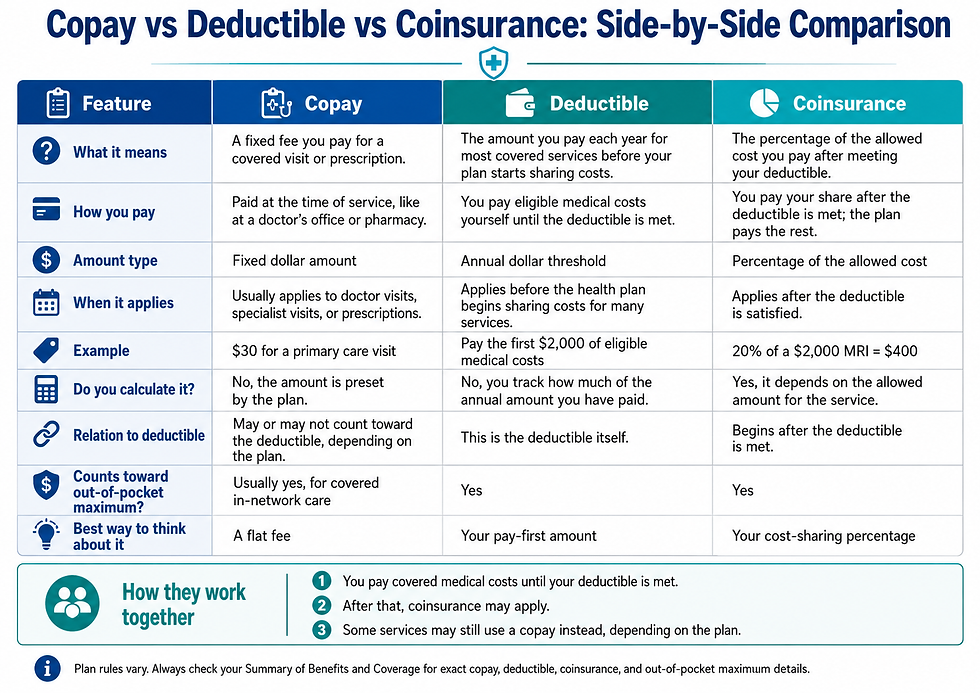
Example: How Copay, Deductible & Coinsurance Work in ABA Therapy Billing
Let’s say a child is approved for ABA therapy three times per week.
The insurance plan shows:
$1,500 deductible
$40 copay
20% coinsurance after deductible
$5,000 out-of-pocket maximum
The family may assume they only owe $40 per visit. But the plan may apply the deductible first. If the deductible has not been met, the family could owe the payer’s allowed amount for each session until the deductible is satisfied.
Once the deductible is met, the plan may then shift to coinsurance or copay, depending on the benefit structure.
This is why therapy providers must verify benefits before treatment begins and recheck benefits when the plan year changes. Understanding how insurance coverage works for ABA therapy can help families avoid unexpected balances and billing confusion.
Without that step, the practice may submit clean claims but still struggle with patient collections because the family was not prepared for the actual responsibility.
FAQ
What is a copay?
A copay is a fixed amount you pay for covered healthcare services, such as doctor visits, urgent care, or prescription medications. The amount is determined by your health insurance plan and usually remains the same each time you receive that service.
Is it better to have coinsurance or copay?
There is no one-size-fits-all answer. Copays can make healthcare costs easier to predict, while coinsurance is often used for larger medical expenses after the deductible has been met. The better option depends on your health needs and insurance plan.
Do you still pay copays if you meet your deductible?
In many health plans, yes. Even after meeting your deductible, you may still owe copays for certain services, medications, or office visits, depending on your insurance policy's benefits.
Is it better to have a higher deductible or coinsurance?
A low deductible usually means higher monthly premiums but lower out-of-pocket costs when receiving care. A high deductible often lowers premiums but increases what you pay before coverage begins.


