.png)
What Is CDI in Healthcare and How Does It Prevent Revenue Loss
A claim can only be as accurate as the clinical record behind it.
When a physician documents the care clearly, coders have the information they need to select supported diagnosis and procedure codes. When important details are missing or unclear, the problem follows the claim downstream. Coding can slow down, queries increase, reimbursement may be affected, and the risk of denial grows.
That is where clinical documentation improvement (CDI) comes in.
What Is Clinical Documentation Improvement
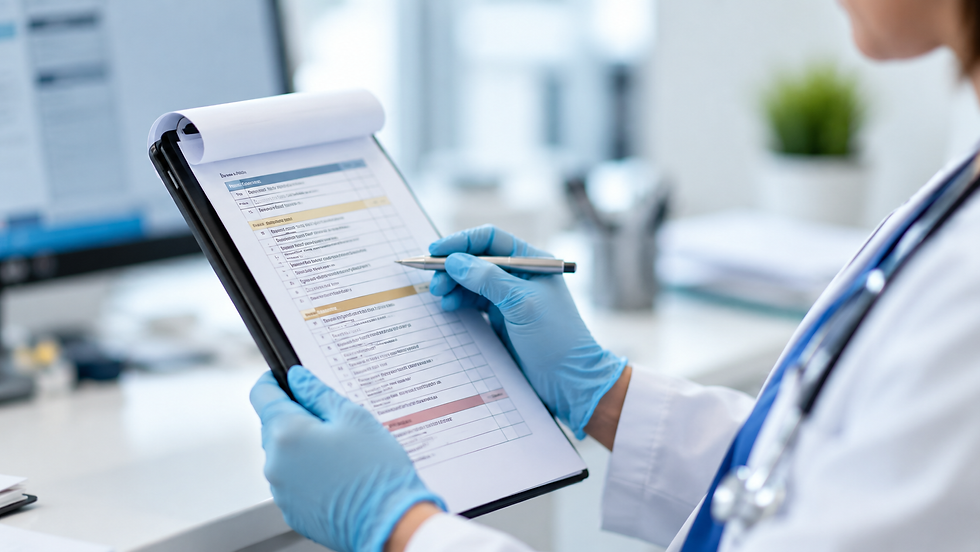
Clinical Documentation Improvement (CDI) is the process of reviewing medical documentation to make sure it accurately reflects the patient’s condition, the care provided, and the medical decision-making involved.
A CDI process looks for documentation that is missing, unclear, incomplete, or inconsistent. When a relevant detail is not clear in the record, a CDI specialist may work with the provider through a compliant query process to clarify the documentation.
The goal is not to change the diagnosis or add information that was not present. It is to make sure the medical record clearly captures what the provider actually diagnosed and treated.
Better documentation gives coders stronger support for code selection and can improve coding accuracy, medical necessity, reimbursement, quality reporting, and audit readiness.
Why Is Clinical Documentation Improvement Necessary
Payers do not pay for what happened. They pay based on what the chart supports.
That is the basic reason a clinical documentation program matters. When documentation is incomplete or unclear, it can create problems throughout the billing process:
Coders may have to assign less specific or lower-level codes.
Payers may deny claims when the documentation does not support the service or diagnosis.
Severity scores may not fully reflect the patient's condition or the work performed.
Audits can uncover documentation gaps that could have been addressed earlier.
A hospital can have excellent clinicians and still lose revenue when the documentation does not clearly support the care provided. Clinical documentation improvement helps address those gaps at the source, before they turn into coding, billing, or reimbursement problems.
Clinical Documentation Improvement vs. Clinical Documentation Integrity
You’ll often see clinical documentation improvement and clinical documentation integrity used interchangeably. Both focus on making sure the medical record accurately and completely reflects the patient’s condition and the care provided.
The difference is mainly in how the work is described. Clinical documentation improvement focuses on the process of identifying and addressing documentation gaps. Clinical documentation integrity focuses more broadly on maintaining the accuracy, completeness, and reliability of the medical record.
In practice, healthcare organizations may use CDI to describe the overall function, regardless of which term they prefer.
How does the Clinical Documentation Improvement Process Work
A working CDI clinical documentation improvement cycle has four moving parts:
Chart review: A clinical documentation improvement specialist pulls open charts, usually within 24 to 48 hours of admission, and reads the notes against the clinical evidence.
Physician query: When the chart is unclear, the specialist sends a short, non-leading query to the attending. For example: "The lab shows creatinine 2.4 and GFR 42. Does the patient meet criteria for acute kidney injury?"
Response and update: The physician answers, the chart is updated, and the record now supports the correct code.
Coding handoff: The complete chart moves to coding. The coder bills what the care actually was, not what the chart happened to show.
The whole cycle takes minutes per chart when the team is staffed right. Most hospitals aim for a query response rate of 80 percent or higher.
How Poor Clinical Documentation Creates Revenue Leakage
This is where most finance teams quietly lose six to seven figures a year. The leaks look small on each chart. They add up fast across a year of claims.
Common revenue leaks:
Undercoding: Diabetes instead of "diabetes with chronic kidney disease stage 3." The DRG drops by thousands.
Missed comorbidities: A documented secondary diagnosis can shift a case from a lower-weighted DRG to a higher one.
Vague language: Words like "possible," "likely," and "concern for" give outpatient coders nothing to bill on.
Denied claims: Payers return the claim. Reworking it costs 25 to 118 dollars in staff time, and roughly 65 percent of denied claims are never reworked at all.
Audit exposure: Charts that cannot defend the billed code become easy targets in a RAC or RADV audit.
A single missed comorbidity on a Medicare DRG can be worth 2,000 to 10,000 dollars in reimbursement. Multiply that by a year of discharges and the number stops being small.
Inpatient vs. Outpatient CDI
CDI began largely as an inpatient function, but documentation improvement now extends well beyond the hospital floor.
Inpatient CDI | Outpatient CDI |
Often performed concurrently | May involve pre-bill or retrospective review |
Strong focus on inpatient diagnosis reporting | Strong focus on outpatient diagnosis and service documentation |
DRG and severity documentation can be important | Medical necessity, E/M, procedures and risk documentation can be important |
CDI may work with patients still admitted | Reviews often happen around or after the encounter |
Closely tied to inpatient coding | Closely tied to ambulatory coding and revenue-cycle workflows |
The research also notes the expansion of CDI into ambulatory and outpatient settings. Pasted text
That expansion makes sense.
A vague office note can cause the same basic problem as a vague inpatient note: the coder does not have enough information to confidently support the claim.
What does a Clinical Documentation Improvement Specialist Do
Clinical documentation specialists sit between the clinical floor and the billing office. Most come from a nursing or coding background, which lets them read a chart the way a physician wrote it and translate what's missing into billing-ready language.
A day in the life of a CDI specialist usually includes:
Reviewing 15 to 25 charts
Writing 3 to 8 physician queries
Running trend reports on query agreement rate
Educating new residents on documentation shorthand
Sitting in on monthly denial review with the coding team
The best clinical documentation improvement specialists do not act like auditors. They act like translators. Physicians answer their queries because the queries respect clinical judgment and never push for a specific diagnosis.
FAQ
What Are the Key Benefits of Starting a CDI Program?
A CDI program can improve documentation quality, support more accurate coding, reduce documentation-related denials, and strengthen audit readiness. It also gives healthcare leaders cleaner clinical data for quality reporting, performance tracking, and revenue cycle decisions.
How Long Does It Take to Become a CDI Specialist?
Many CDI specialists come from nursing or inpatient coding backgrounds and have several years of experience before moving into the role. Certification such as CCDS or CDIP can provide additional training and help prepare for CDI work.
How Do You Get Into Clinical Documentation Improvement?
Start by learning how CDI works in a hospital or health system and gaining experience in nursing or inpatient coding. Certifications such as CCDS, CDIP, or CCS can also help when pursuing a CDI position.
What Is the Difference Between CDI and Medical Billing?
CDI focuses on the medical record and documentation, while medical billing focuses on turning documented services into claims and getting them paid. CDI supports billing by making sure the documentation clearly supports the services being reported.


